Graphic Scenes of the Japan Expedition
Lithographs by William Heine - 1856
Heine, William:
Graphic Scenes of the Japan Expedition by Wm Heine, Artist of the Expedition, New York, G. P. Putnam & Company, 1856, ten lithographs by Sarony & Company, folio (20 1/4~1/2 x 15 in).
William (Wilhelm) Heine was the official artist of Commodore Matthew C. Perry's expedition to Japan in 1853-54. On returning to the United States, he produced a series of 10 prints commemorating the trip. This project employed the New York lithographic firm of Sarony, at that time probably the most skilled craftsmen in their profession in the United States.
The plates were issued in a loose (folio) format and in a book format.
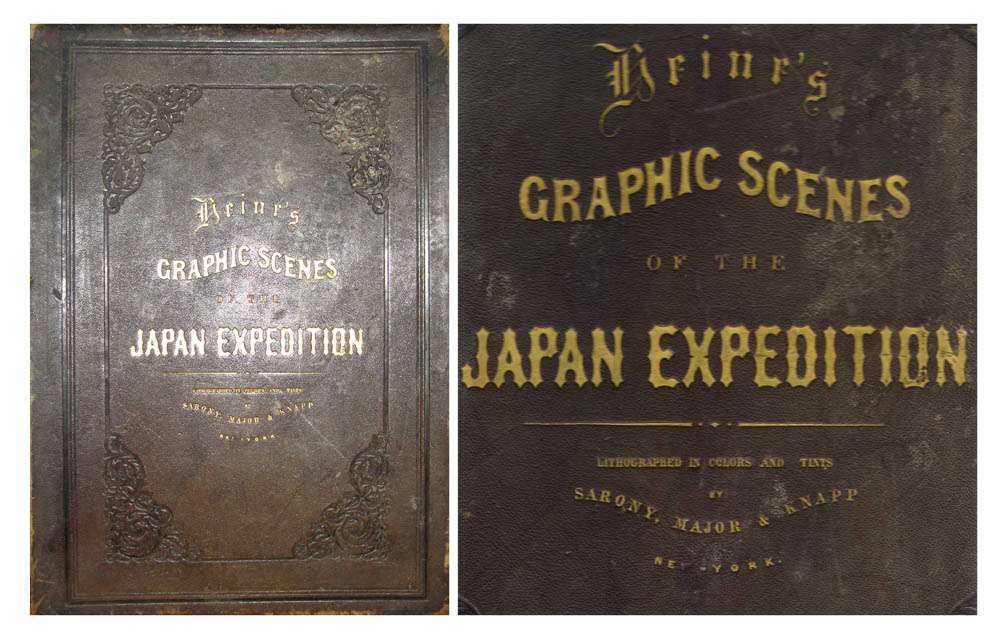
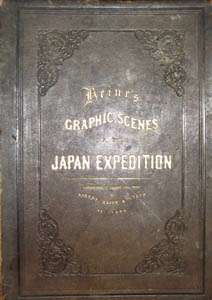
The covers are brown blind stamped cloth with gilt lettering on the front cover. To see the front cover, click here.
Book Format Edition Cover
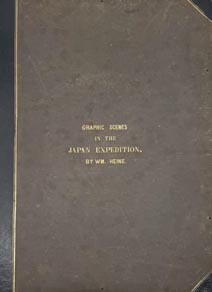
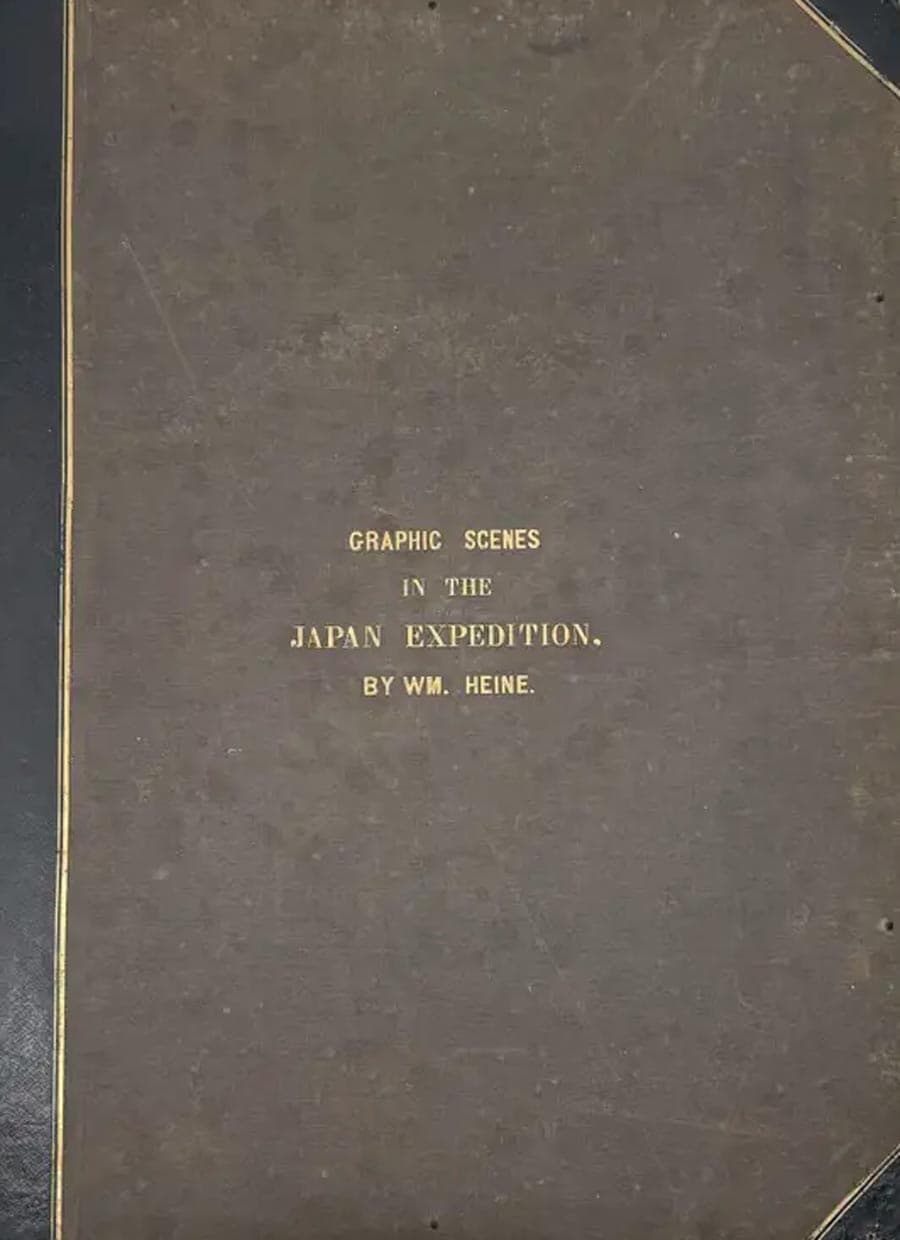
Folio Format Edition Folder
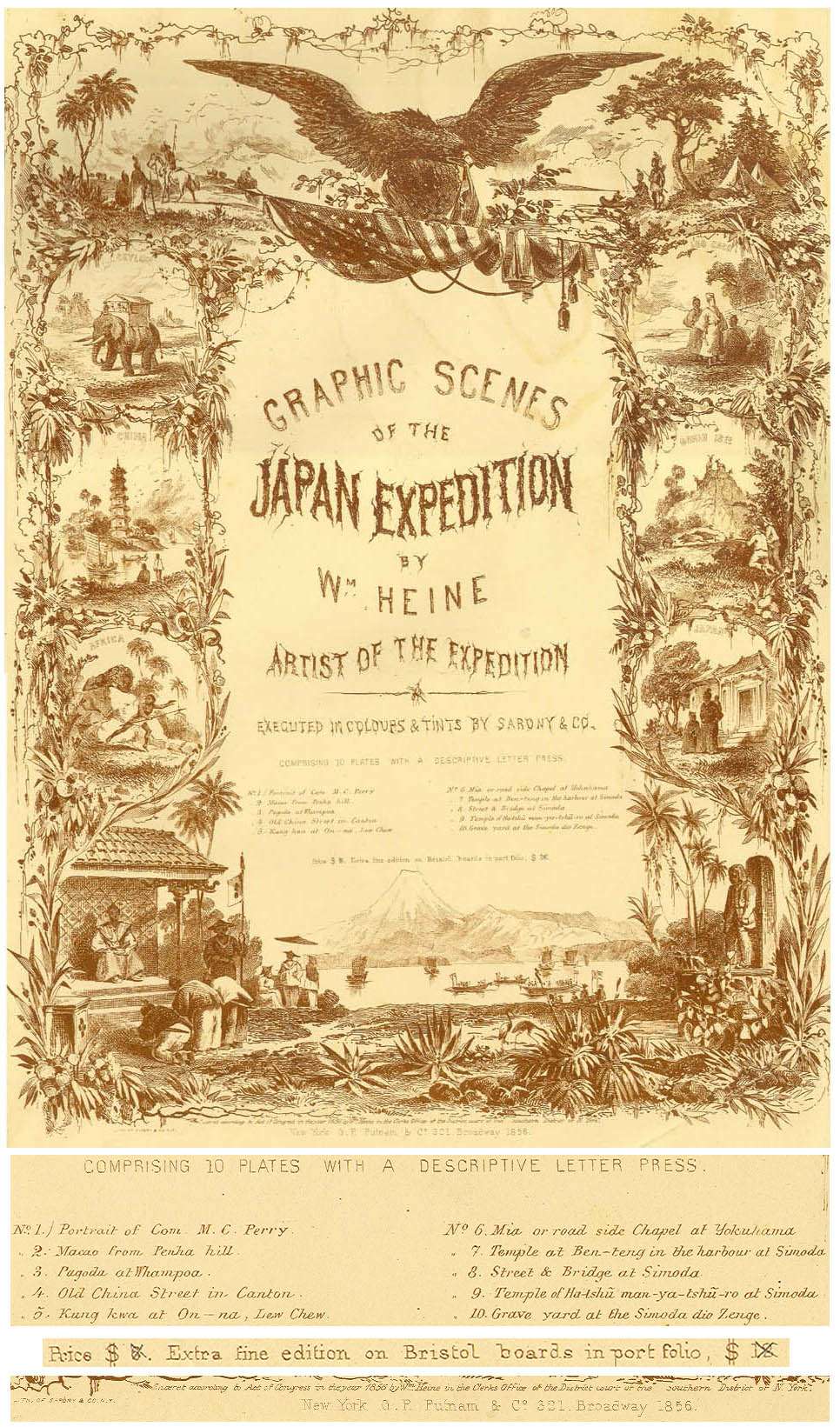
The book has an ornate/decorative illustrated title page followed by an unillustrated title page. You often see this folio referred to as "Graphic Scenes of..." and "Graphic Scenes in...". This occurs because the illustrated title page reads "in" while the second title pages uses "of". Regarding the ten plates and the illustrated title plate, the unillustrated title plate states "Ten Plates and an Illustrated Title-Page, Printed in Colors and Tints by Sarony & Co." Following the title pages is a one page introduction by F. L. Hawks. The ten plates then follow, each accompanied by a one page discussion of the image..
These 10 lithographs were marketed in the book (in 1856 sold for $6.00) and in a deluxe folio format (in 1856 sold for $12.00). The deluxe folio lithographs are on bristol board while the book lithographs are on thick card stock type paper. The bristol board plates tend to develop a concave bend. These prices are shown on the illustrated lithographed title page.
A contemporary catalogue described the publication this way
Heine.--Graphic Scenes in the Japan Expedition, by William Heine, Artist of the Expedition. Printed in Colours and Tints by Sarony and Co.; comprising 10 folio Plates and an Illustrated Title Page, with descriptive letterpress. New York, 1856. Plain Edition, printed in Colours, £2 2s. Fine edition, printed on Bristol boards, £4 4s. (Page 332, Trübner's Bibliographical Guide to American Literature, A Classed List of Books Published in the Unites State of American During the Last Forty Years. With Biographical Introduction, Notes, and Alphabetical Index by Nicolas Trübner, Benjamin Moran, Edward Edwards, London, 1859).
Characteristics of the Regular (Book) and Deluxe (Fine) Editions.
Format. A complete book or folio is a scarce item and very little is information is available in the public domain describing what the as issued book or folio format looked like. I have personally examined two complete books. I have never examined a complete folio and the information on that is based upon a description by a major bookseller.
1. Book Format. I have personally examined two copies. One copy was in original binding (leather bound) and it had an illustrated title page and a non-illustrated letterpress title page. The second copy was apparently rebound and it did not have the illustrated title page. It did have the letterpress title page, the Introduction, the Perry bibliography and accompanying text pages for the 9 other plates (a total of 12 letterpress pages). All the lithographs and letterpress pages were bound into the book. The plates are not on Bristol board but on thick cardboard type paper. Eight plates are tinted and 2 have color added.
2. Folio Format. I have not examined a complete deluxe edition folio. It has been described by a major bookseller in the terms that follow. The book (folio) has thin cream card wraps. The front wrap being the lithographed illustrated title page. The back wrap was not described and presumed to be blank. The two wraps were bound by a blue/green cloth over the spine and approximately 1/2 inch onto the wraps. The 10 plates and 12 pages of letterpress (as noted above) were loose within the bound wraps. These were contained in a brown cloth portfolio with the title "Graphic Scenes - in the - Japan Expedition - Wm. Heine" in gilt at the upper right corner. The plates were described as "one tinted portrait of Perry from a daguerreotype by P. Haas, nine views by Heine printed in colours and finished by hand."
Title Page and Plates 1~10
Graphic Scenes
of the Japan Expedition
(Regular Edition - Bound Book)
Illustrated Cover/Title Page (Lithograph Printed in Brown)
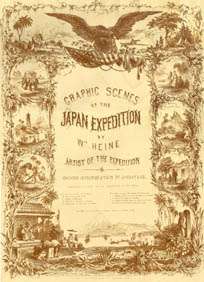
Introduction (Text Only)
[Image on the Left is from a Regular Edition. Image on the Right (when picture is available)
is from a Deluxe Edition (Bristol Board, Hand Coloring/Finishing Added)]
The 10 plates pictured below are from the regular
book format edition, not the deluxe folio edition.
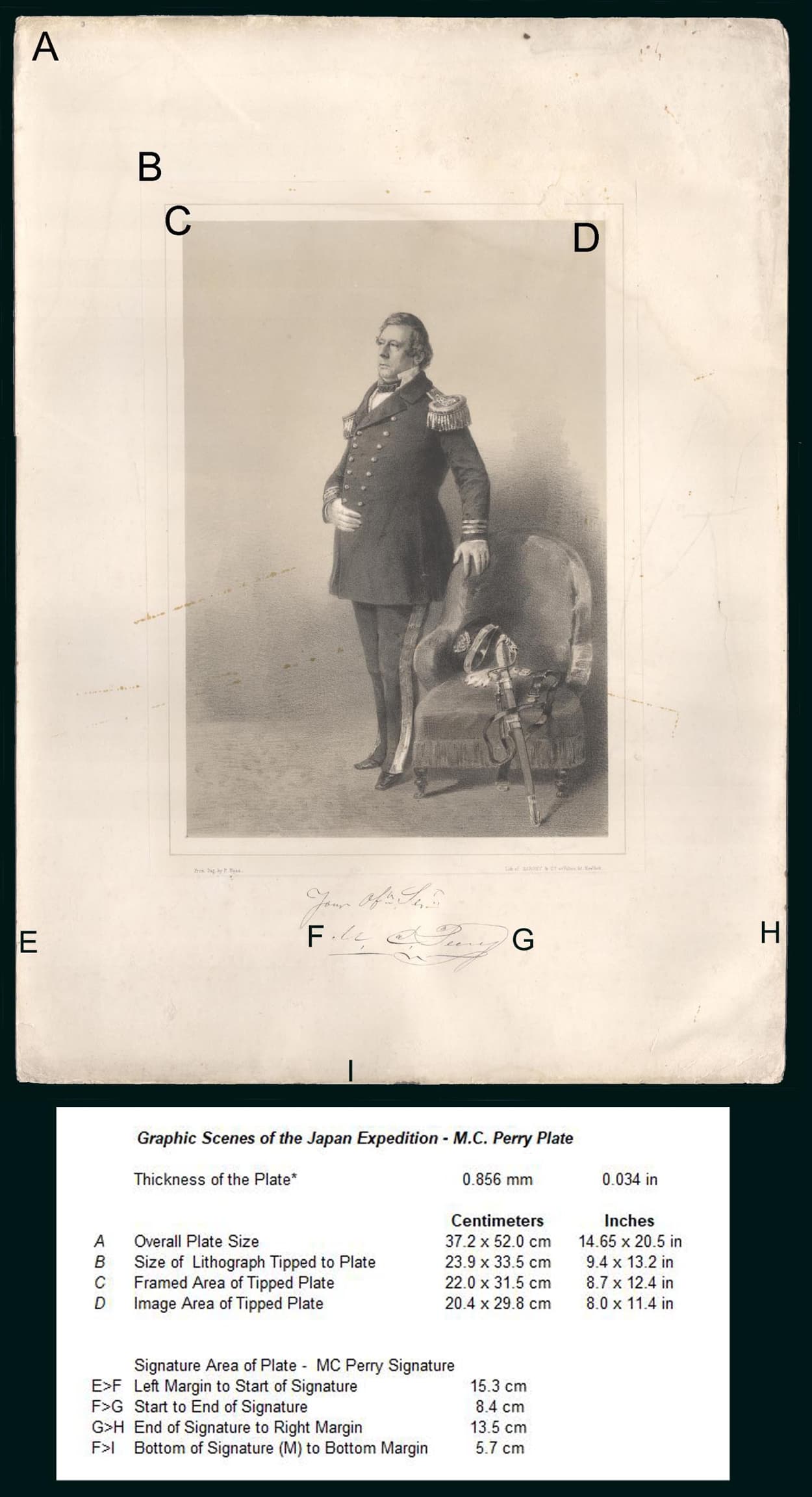
Plate #1 - Portrait of Commodore Perry
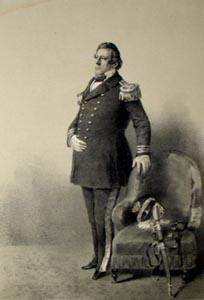
Plate #2 - Macao from Penha Hill
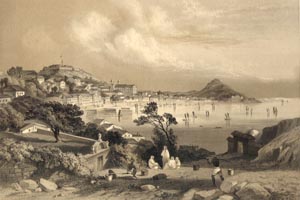
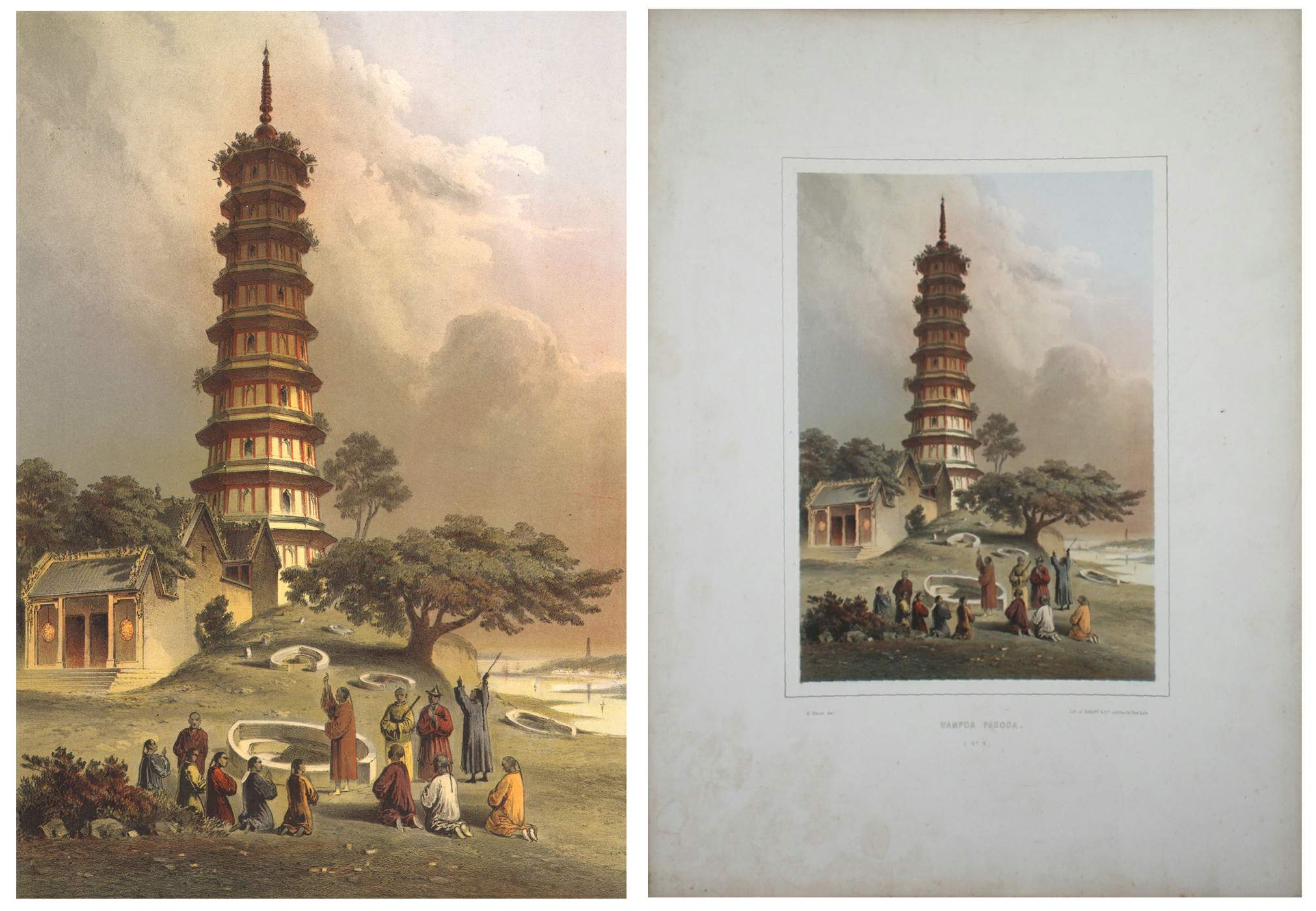
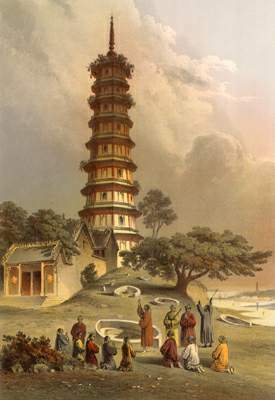
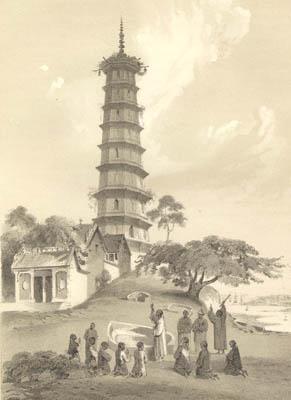
Plate #3 - The Pagoda of Wampoa - Colored
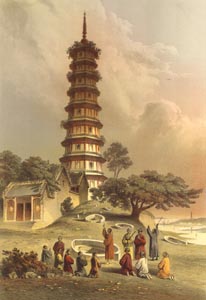 Regular Edition Regular Edition 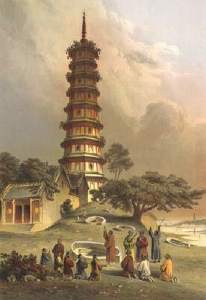 Deluxe Edition Deluxe Edition
Plate #4 - Old China Street in Canton - Colored
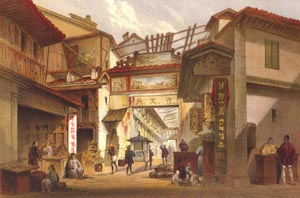 Regular Edition Regular Edition 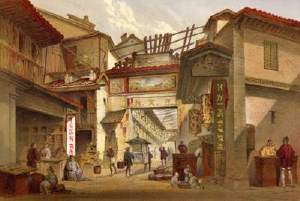 Deluxe Edition Deluxe Edition
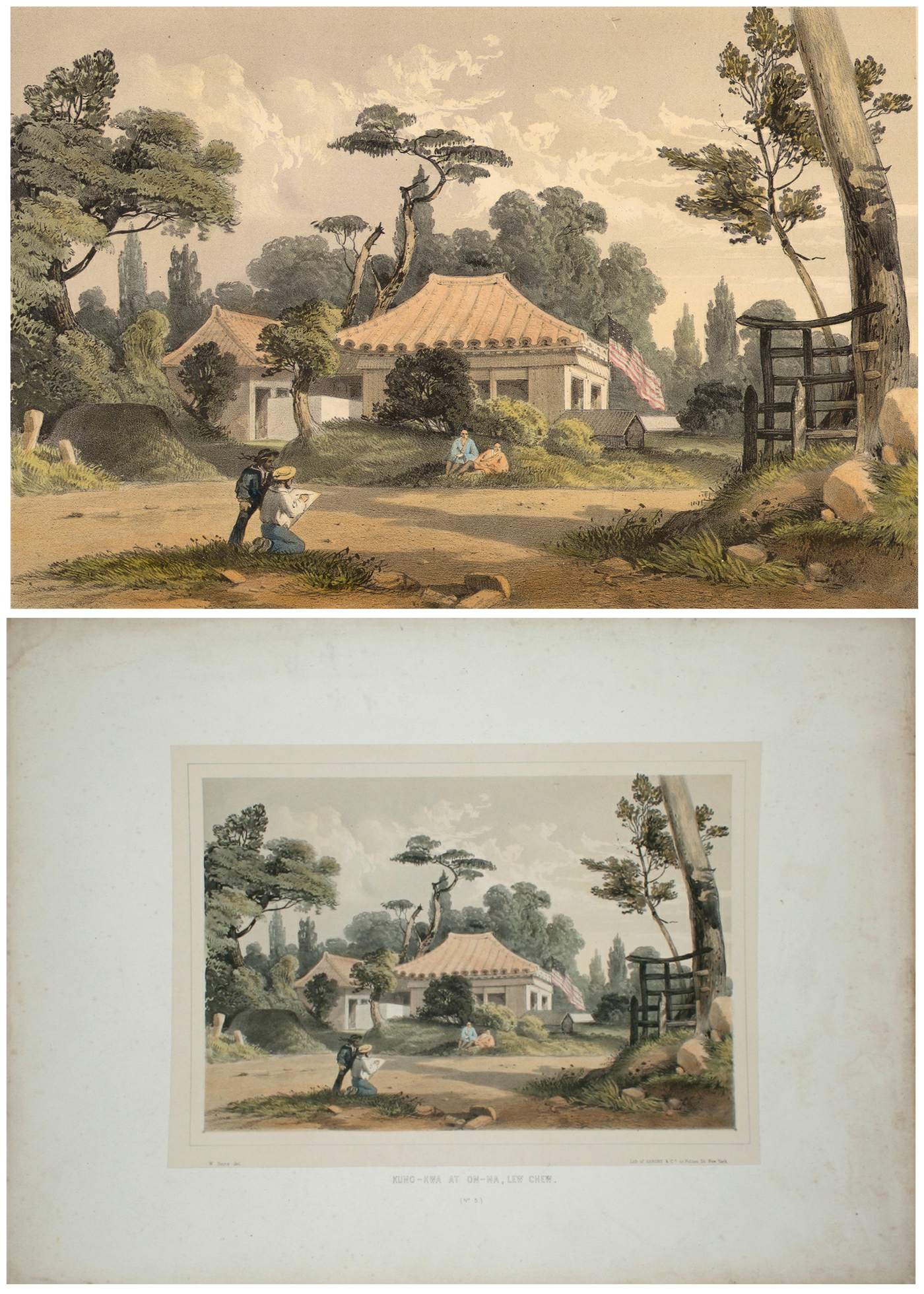
Plate #5 - Kung-Kwa at On-Na, Lew-Chew
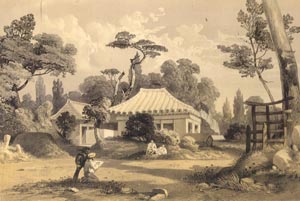 Regular Edition Regular Edition 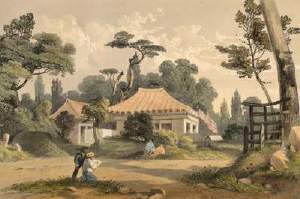 Deluxe Edition Deluxe Edition
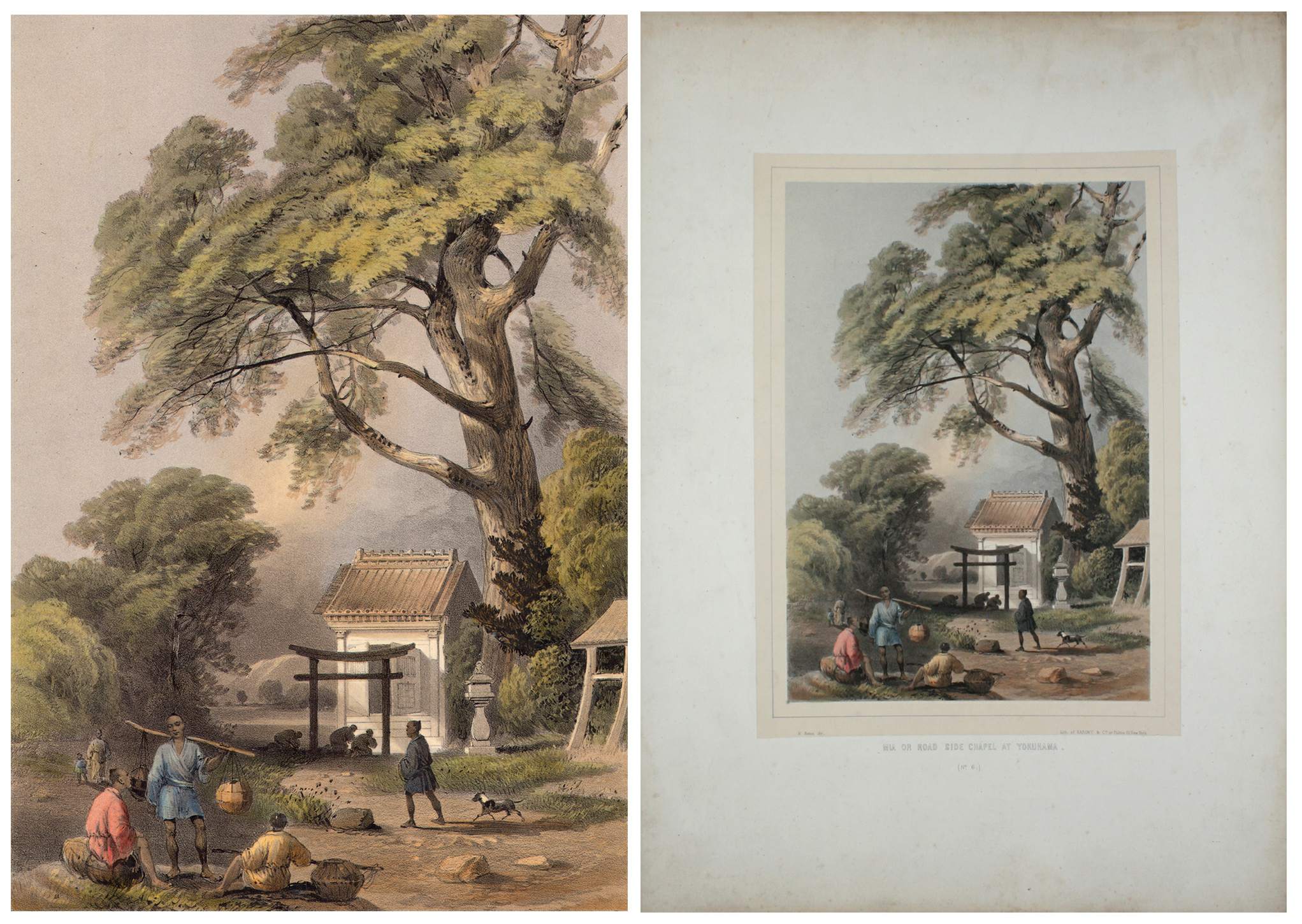
Plate #6 - Mia, the Roadside Chapel at Yokuhama
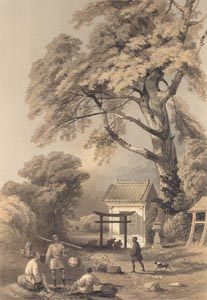 Regular Edition Regular Edition 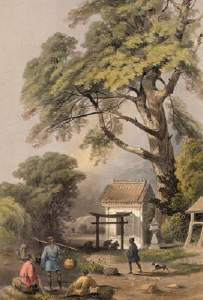 Deluxe Edition Deluxe Edition
Plate #7 - Temple of Ben-teng in the Harbor at Simoda
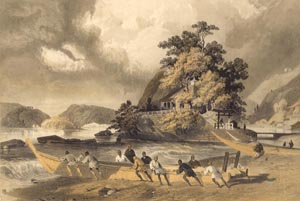 Regular Edition Regular Edition 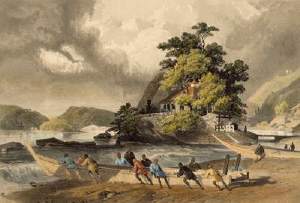 Deluxe Edition Deluxe Edition
Plate #8 - Street and Bridge at Simoda
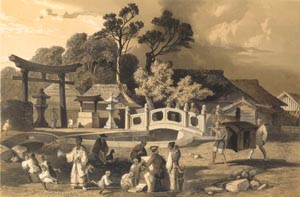 Regular Edition Regular Edition
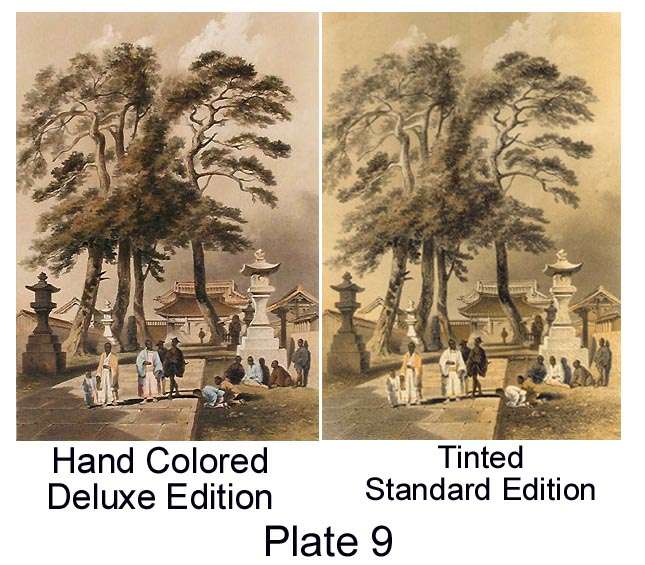
Plate #9 - Temple of Ha-Tshu-Man-ya Tshu-ro at Simoda
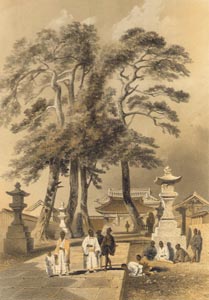 Regular Edition Regular Edition 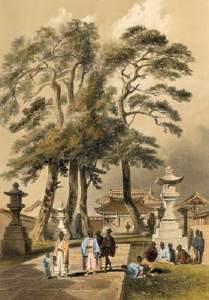 Deluxe Edition Deluxe Edition
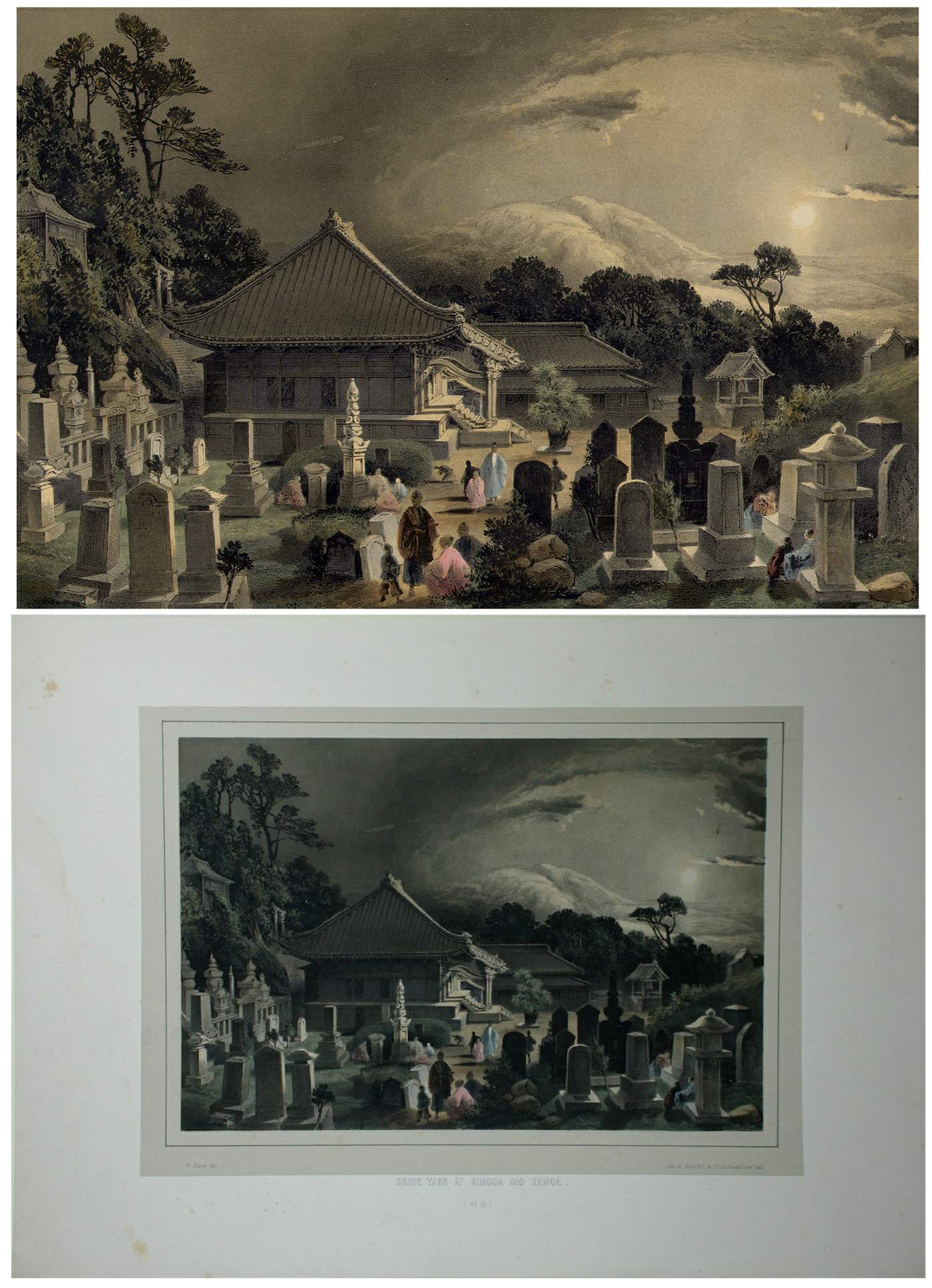
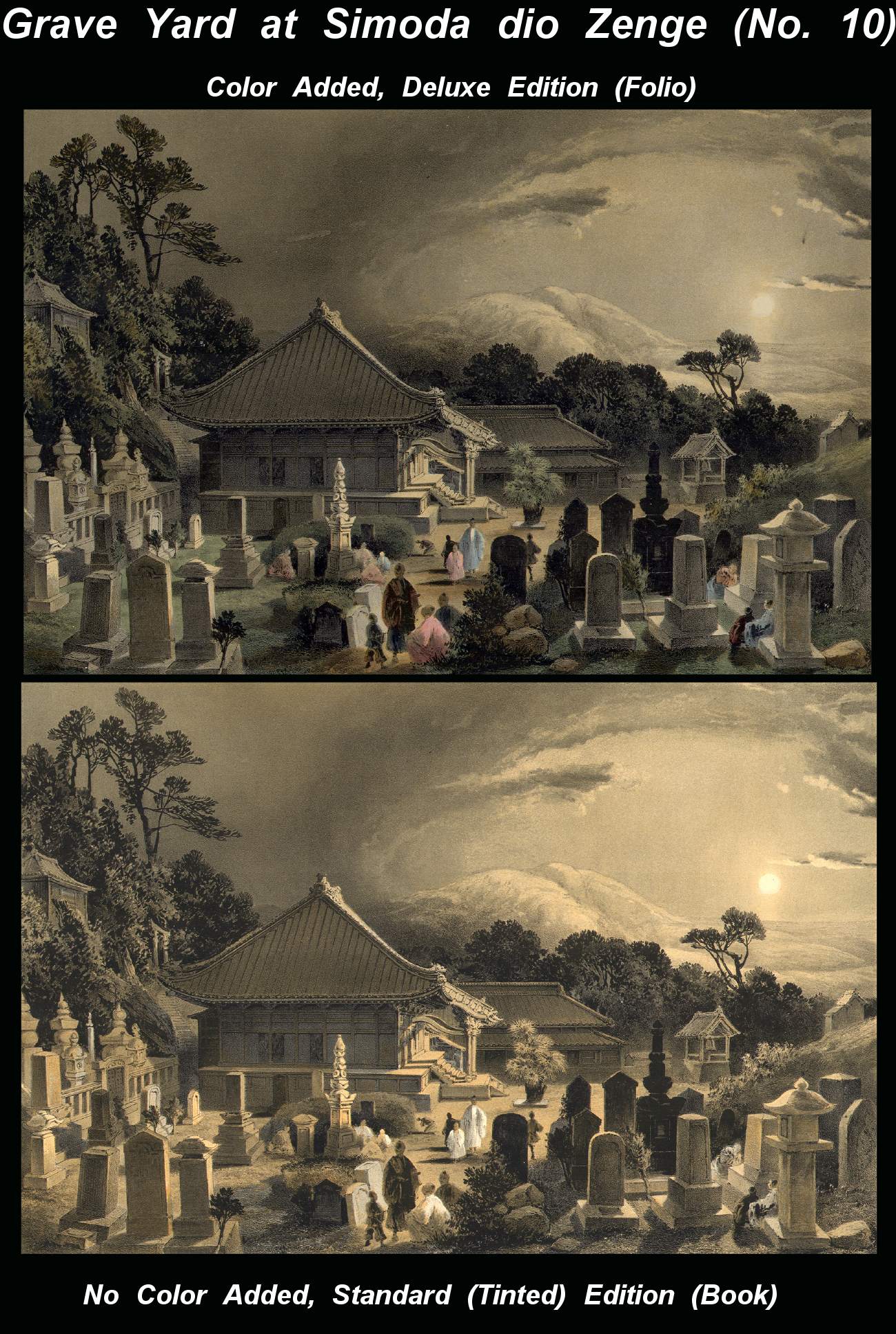
Plate #10 - Grave Yard at Simoda Dio Zenge
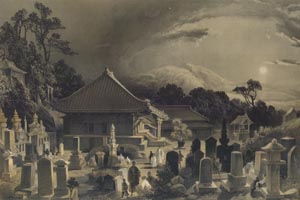 Regular Edition Regular Edition 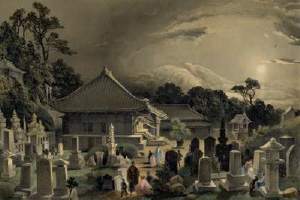 Deluxe Edition Deluxe Edition
To see a close-up side by side comparison of a Deluxe (color added) lithograph and a Standard (tinted but no color added) lithograph, click here.
These lithographs have been described as being many times finer than those in the regular account of the Perry expedition and are considered by some a rarity. The images on these prints are approximately 40% larger than those that are published in the Narrative of the Expedition.
Here is an example of Plate #3 (Whampoa Pagoda). This print did appear in the Narrative of the Expedition.
The Finer "Graphic Scenes" Print
|
Same Print from Narrative
|
The book or the complete print folio are very scarce and very seldom appear on the market.
One year earlier (1855), Eliphalet M. Brown, Jr., published a series of six (6) large size large ("Elephant" folio) high quality hand colored lithographs based upon his and Wilhelm Heine's art. Brown was a photographer (daguerreian) on the Expedition. These lithographs by Sarony and Company measure 36 1/2 x 26 in - 92.5 x 65.5 cm. These should not be confused with the Graphic Scenes prints. The "Elephant" folio lithographs are rare (museum quality). For more information on the E. Brown folio of lithographs, click here.
This is the "Elephant" folio lithograph titled "Passing the Rubicon."
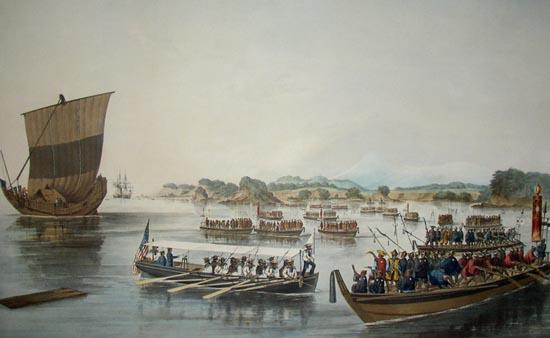
The six lithographs in the E. Brown folio are:
- Passing the Rubicon, Lieut. S. Bent in Mississippi's First Cutter forcing his way through a Fleet of Japanese boats while surveying the Bay of Yedo, Japan, July 11th 1853.
- First Landing of Americans in Japan, under Commodore M. C. Perry at Gore-Hama July 14th 1853.
- Landing of Commodore Perry, officers and men of the Squadron, to meet the Imperial Commissioners at Yoku-Hama, Japan, March 8th 1854.
- Exercise of the Troops in Temple Grounds, Simoda, Japan in presence of the Imperial Commissioners, June 8th 1854.
- Landing of Commodore Perry, Officers and men of the Squadron to meet the Imperial Commissioners at Shimoda, Japan, June 8th 1854.
- Return of Commodore Perry, Officers and men of the Squadron from an Official Visit to the Prince Regent at Shuri, June 6th 1853.
|